Testing • Transparency • Higher Standards
The Full Spec Standard™
Independent testing. Complete transparency.
A higher standard for research peptides.
The Full Spec Standard™ is our approach to analytical testing, lot traceability, and public COA access—designed to give researchers clear information about the materials they are evaluating.
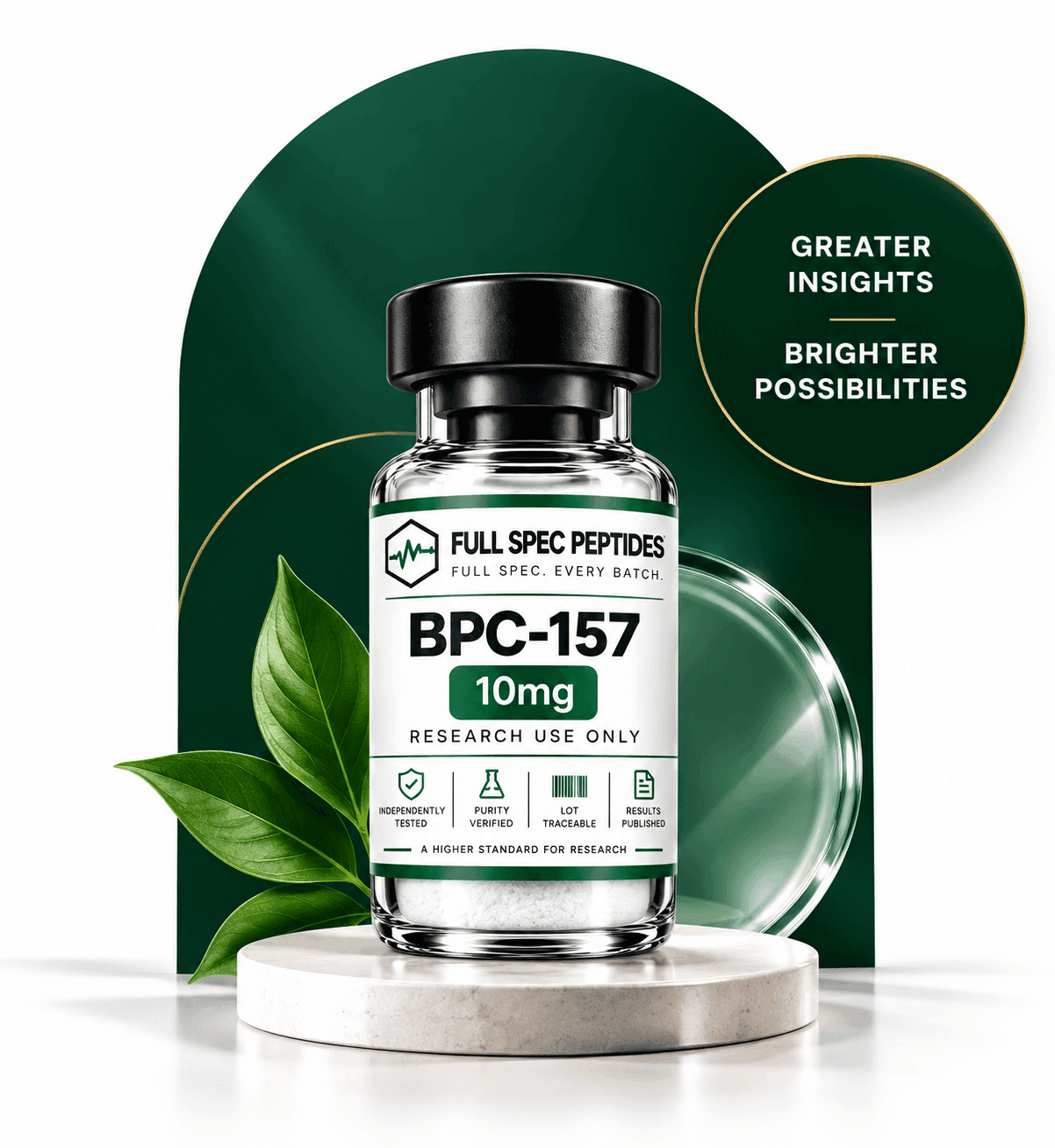
“Don’t trust the claim.
Check the test.”
Independent Third-Party Labs
Analytical Testing
Lot-Specific COAs
Public Access to Results
Transparent Documentation
From Sample to Transparency
Our Testing Process
Analytical methods answer different questions about a material. Our testing framework is designed to clearly document what was tested, which methods were used, and the results reported for each applicable lot.
- 1
Sample Selection
A representative sample from the applicable production lot is submitted for independent analytical testing.
- 2
HPLC Purity Analysis
HPLC evaluates chromatographic purity by separating and measuring components present in the analyzed sample.
- 3
Identity Analysis
When an appropriate identity method such as mass spectrometry is performed, the resulting molecular information can be compared with the expected characteristics of the target material.
- 4
Additional Analysis
Additional analytical measurements may be performed depending on the material, lot, and testing program.
- 5
Lot-Specific COA
Available analytical results are organized by lot and published through the Full Spec COA database.
Understanding Analytical Testing
Different Tests. Different Answers. A Clearer Picture.
No single analytical measurement describes every characteristic of a research material. Understanding what each method measures is essential when reviewing testing documentation.
HPLC Purity Analysis
High-performance liquid chromatography separates components within an analyzed sample and can be used to evaluate chromatographic purity.
Identity Analysis
Identity testing evaluates characteristics of the analyzed material against expected reference information. The specific analytical method used should always be identified in the applicable laboratory report.
Additional Analytical Data
Depending on the testing program, additional analytical measurements may provide information beyond chromatographic purity or identity. Always review the lot-specific report to determine exactly what was tested.
View COAs →Purity ≠ Identity
Purity and molecular identity are related but distinct analytical characteristics. A purity result describes what was observed using the stated purity method. Identity testing addresses a different analytical question. Neither should automatically be interpreted as evidence of other attributes that were not tested.
Always review the applicable laboratory report to understand:
- • what was tested
- • which method was used
- • what result was reported
- • which lot was analyzed
Better information fuels greater possibilities.
Every Result Should Be Traceable
Testing Should Follow the Lot.
Full Spec organizes testing documentation around individual lots so researchers can review the analytical information associated with the material being evaluated.
View COA DatabaseExample Report Layout
- Product
- BPC-157
- Lot
- FSP-BPC-XXXXXX
- HPLC
- Result shown on applicable report
- Identity
- Method/result shown when performed
- Lab
- Independent third-party laboratory
- Test Date
- Lot-specific
- Report
- Original laboratory document
What Should You Look For?
Certificate of Analysis
Illustrative layout — not an actual laboratory report. Numbers correspond to the checklist at right.
[Product Name]
[Lot Number]
[Independent Lab]
[Analytical Method]
[Reported Result]
[Test Date]
- 1Product / material
- 2Lot number
- 3Laboratory
- 4Analytical method
- 5Reported result
- 6Test date
- 7Chromatogram / spectrum, where applicable
Go Deeper
Testing & Analytical Guides
Common Questions
Testing FAQ
What does peptide purity mean?
Is purity the same as identity?
What is HPLC?
What is mass spectrometry?
What is a Certificate of Analysis?
Why does lot-specific testing matter?
How can I find the COA for a Full Spec product?
All products are intended for laboratory and research purposes only. Not for human or veterinary use. Not a drug. Not for diagnostic or therapeutic use.
Full Spec. Every Batch.
Don’t Trust the Claim. Check the Test.
Explore available lot-specific analytical documentation in the Full Spec COA database.